They’re Still Listening: Why Independent Ownership Is Skiing’s Best Hope


By Daniel Kaufman
My dad called today and asked why I hadn’t posted in a while.
It was a fair question, and one that deserved an honest answer. Life has been full lately. Changes personally, changes professionally, a season of figuring things out. But here’s what I told him, and what I meant: some things don’t change. My love for skiing doesn’t change. My love for the mountains doesn’t change. My love for the community of people who show up every year, season after season, and find something true on a chairlift or in a lodge or on a trail — that doesn’t change either.
And neither does my need to write about it.
So Dad, this one’s for you. Thanks for the nudge.
The Ghost of Corporate Ownership Past
Killington has a complicated history, and if you ski New England, you probably know at least part of it. What you might not know is how much the resort actually shrank under the years of corporate indifference before its current rebirth.
In 1996, the storied S-K-I Limited — which had grown Killington into the biggest ski resort in the East — sold the mountain to American Skiing Company (ASC) for $137 million. ASC was a publicly traded company with ambitions that outran its balance sheet. They arrived with big ideas and left a trail of neglect.
Under ASC’s watch, terrain that had made Killington legendary quietly disappeared. The Sunrise Mountain area, which once gave the resort access to a whole additional face of the mountain, was shuttered — the lift closed, the base lodge abandoned. The original Ramshead double chair, which used to run all the way to the true summit of Ramshead Mountain, was cut short and replaced with a faster but smaller footprint quad in 1997. The Northeast Passage base area, once a full portal into the mountain, was effectively mothballed by the late 1990s. The Devil’s Fiddle quad on Bear Mountain sat dormant for years — towers still standing, haul rope gone, a ghost lift rusting in plain sight. Killington’s own town manager, David Lewis, said publicly at the time of ASC’s sale that the resort “has not seen any expansion, new lifts, trails or major infrastructure improvements for quite some time” and that it was “not positioned where it should be, nor where it was 15 years ago.” He added that profits from Killington had been used to service debt and bankroll ASC’s other projects — most notably The Canyons in Utah.
ASC finally sold Killington to POWDR Corporation in 2007 for just $85.2 million — $52 million less than they’d paid eleven years earlier. The resort had been asset-stripped and left smaller than it started.
POWDR did invest — new high-speed lifts, a new $30 million base lodge, gondola cabin replacements — but even those good years couldn’t fully undo the ASC era. The mountain’s footprint, and its spirit, had been diminished.
What Independent Ownership Actually Looks Like
In 2024, Killington and its sister mountain Pico were sold again — this time to a group called Killington Independence Group LLC, made up of local investors. And in just two seasons, they’ve committed over $65 million in capital improvements. That’s not a press release number. That’s a new Superstar Six high-speed chairlift, replaced gondola cabins, thousands of new snowguns, a redesigned beginner area at Pico, and a restored sense that someone actually cares what happens here.
But it’s not the dollars that tell the story best. It’s the rope tow.
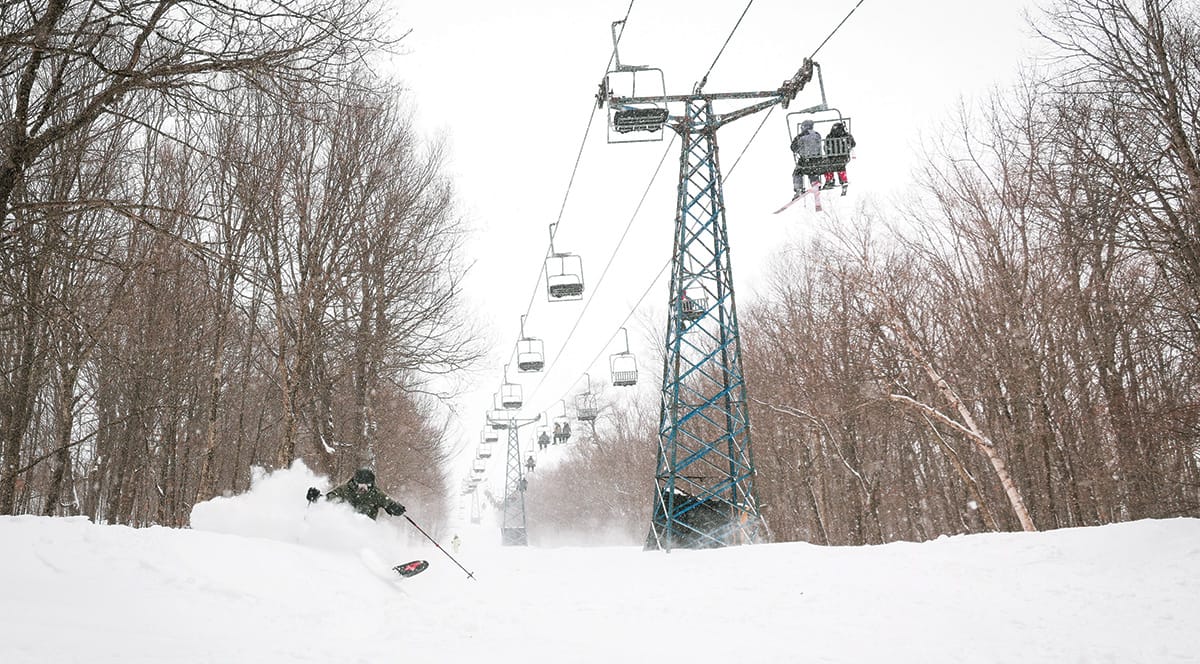
This past season, Pico Mountain’s Outpost Double — a historic lift that serviced the resort’s best advanced and expert terrain — suffered a catastrophic main drive-shaft failure. After a comprehensive engineering review, the resort concluded the lift was beyond repair due to its age and the unavailability of parts. In an earlier era of corporate ownership, that would have been the end of the story. Close the lift. Pull the signs. Let the terrain go fallow. Maybe revisit it in a master plan that never gets funded.
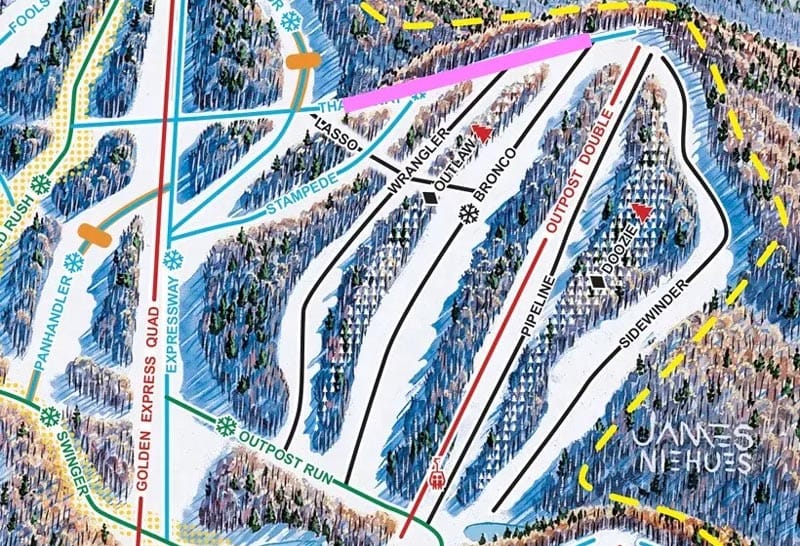
Instead, Killington’s independent owners did something different. They announced the problem clearly and directly to their skiers. They explained the situation. They acknowledged that permitting timelines and lead times for new lifts meant a permanent replacement couldn’t be ready for the 2026-27 season — Vermont’s Act 250 permitting process is notoriously slow, and they weren’t going to pretend otherwise. And then they got creative: they’re installing a rope tow this summer that will access the full Outpost terrain pod — running from the intersection of Prospector and That A Way all the way to the top — so the area won’t sit dark for a season. Meanwhile, permitting and lift procurement are already underway for a brand-new chairlift in the footprint of the old Outpost Double, with a target opening date of the 2027-28 season — just in time for Pico’s 90th anniversary. That is the decision-making of people who are invested in the mountain’s future, not just its quarterly numbers.
They listened. They communicated. They found a way.
Meanwhile, Across the State Line
Sunday River is one of the finest ski areas in the East. Under Boyne Resorts, it has invested heavily in infrastructure — the Jordan 8-pack, the Barker 6, the Chondola, aggressive snowmaking expansion. There’s real commitment there, and it shows on the hill.
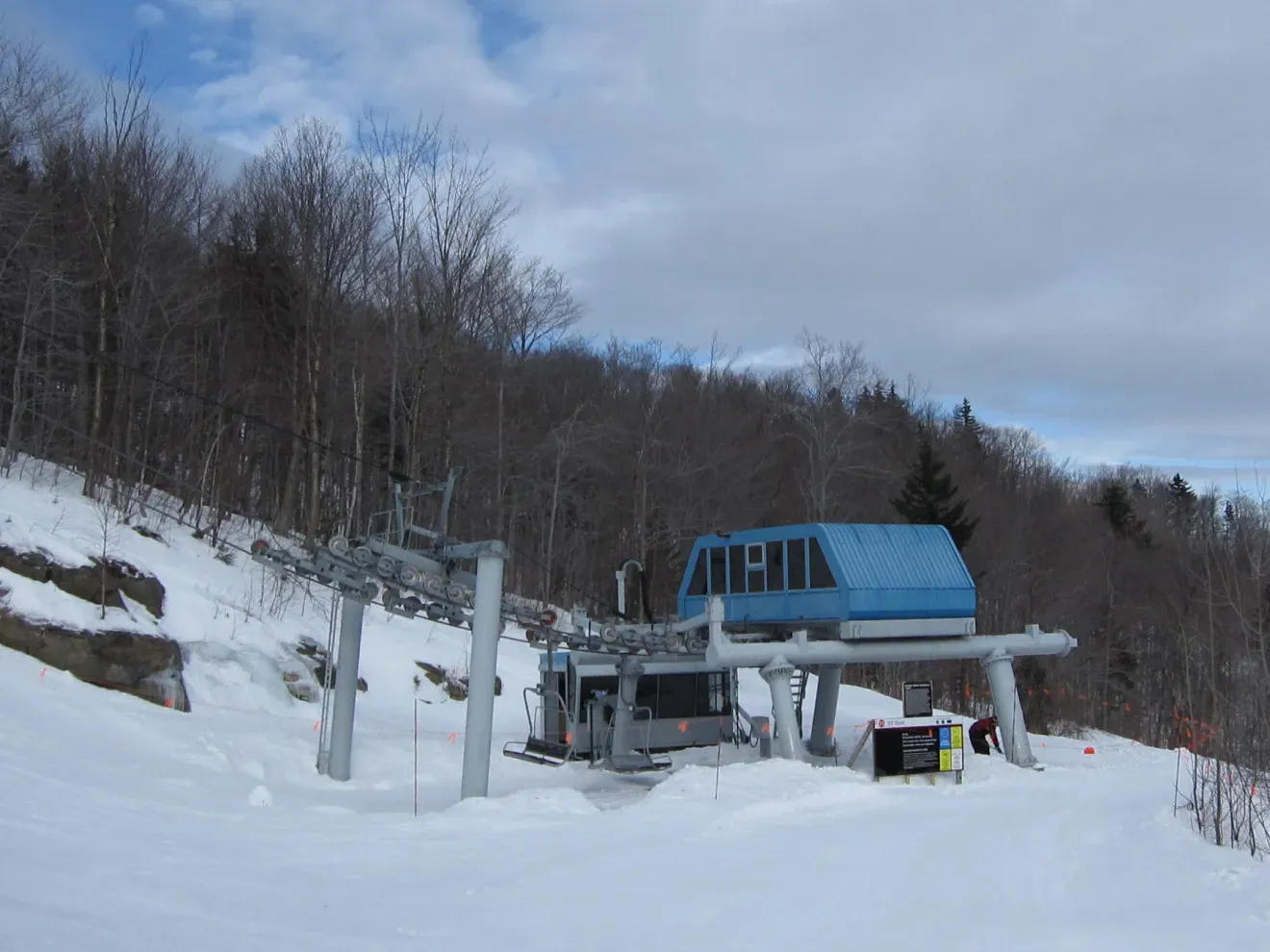
But this past season, the Oz Quad — the lift that serves one of Sunday River’s most distinctive and beloved peaks, with its tight glades and expert terrain — was closed due to a mechanical issue. And the silence from the resort was deafening. No clear communication about what happened, no timeline for resolution, no creative workaround offered to the skiers who had been counting on that terrain. Oz just… wasn’t there. And it also wasn’t explained.
The contrast is hard to ignore. Boyne — a large, multi-resort operator with resorts from Maine to Montana — is not without its virtues. But when things go wrong and the resort goes quiet, you feel the distance between management and mountain. This spring, Sunday River faced a separate round of criticism when it abruptly curtailed spring operations, closing significant terrain and lifts well before the season should have ended. After significant backlash from passholders, the resort actually apologized in writing, acknowledging “when we announced reduced spring operations, we missed the mark.” That kind of accountability is worth something. But skiers shouldn’t have to fight for it.
A Movement Worth Watching
The story of independent ownership is bigger than Killington. It’s becoming one of the defining conversations in American skiing.
In Colorado, the town of Nederland — population 1,500 — voted to purchase Eldora Mountain Resort from POWDR Corporation for $120 million, backed by revenue bonds tied to the mountain’s own earnings. Not tax increases. Not private equity. A community saying: this mountain belongs to us, and we’re going to run it that way. Their vision centers on local access, environmental stewardship, and the idea that a ski area should serve the people who live around it first. As one observer put it, it’s “a bold, defiant move for the soul of skiing.”
In New Hampshire, the Indy Pass’s Erik Mogensen personally stepped in to save Black Mountain from closure, reimagining it as what he calls an “Independent Mountain Laboratory” — a place to experiment with what skiing can be when profit isn’t the only scorecard.
And at small, independent areas across New England, places like Magic Mountain in Vermont, the model is simpler but just as powerful. No corporate memos about brand alignment. Just honest, direct communication with the people who ski there. Raw social media posts from snowmakers standing by the pond after a rainstorm. Terrain decisions made by people who ski the mountain themselves.
These places don’t always have the newest lifts or the fanciest lodges. What they have is something harder to manufacture: trust.
Why It Matters
This sport gave me something I can’t fully put into words. The mountains taught me how to be present. The community taught me how to belong somewhere. And the act of writing about skiing has always been my way of honoring both.
When I see a rope tow going in at Pico so that skiers don’t lose a winter of access to terrain they love, I see people who understand what this sport is actually about. When I see the town of Nederland voting to buy their mountain so future generations can grow up skiing it, I see the same thing. When I see a small Vermont ski area communicating honestly with its community even when the news isn’t good, I feel something like hope.
Corporate ownership isn’t always bad. Money matters. Infrastructure requires capital. But there is something irreplaceable about local people making decisions for the mountain they love, answering to the community they live in, and finding creative solutions when things go sideways — instead of just letting the terrain go dark and waiting to see if anyone notices.
They notice. We always notice.
Dad, thanks for asking where I’d been. Turns out I just needed a reason to get back to the keyboard. Love you. See you on the hill.