The Mountain That Got Away — And Why I Can’t Stop Thinking About It

Posted to DanSkiAndBuild.com | June 2026
There’s a particular kind of real estate that makes my brain light up: distressed assets with a story, underutilized land with bones, and places where someone else’s abandoned ambition becomes someone else’s opportunity. Last week, I came across a listing that hit all three.
170 VT Route 100, Bridgewater, Vermont. 309.24 acres. Asking $4.2 million.
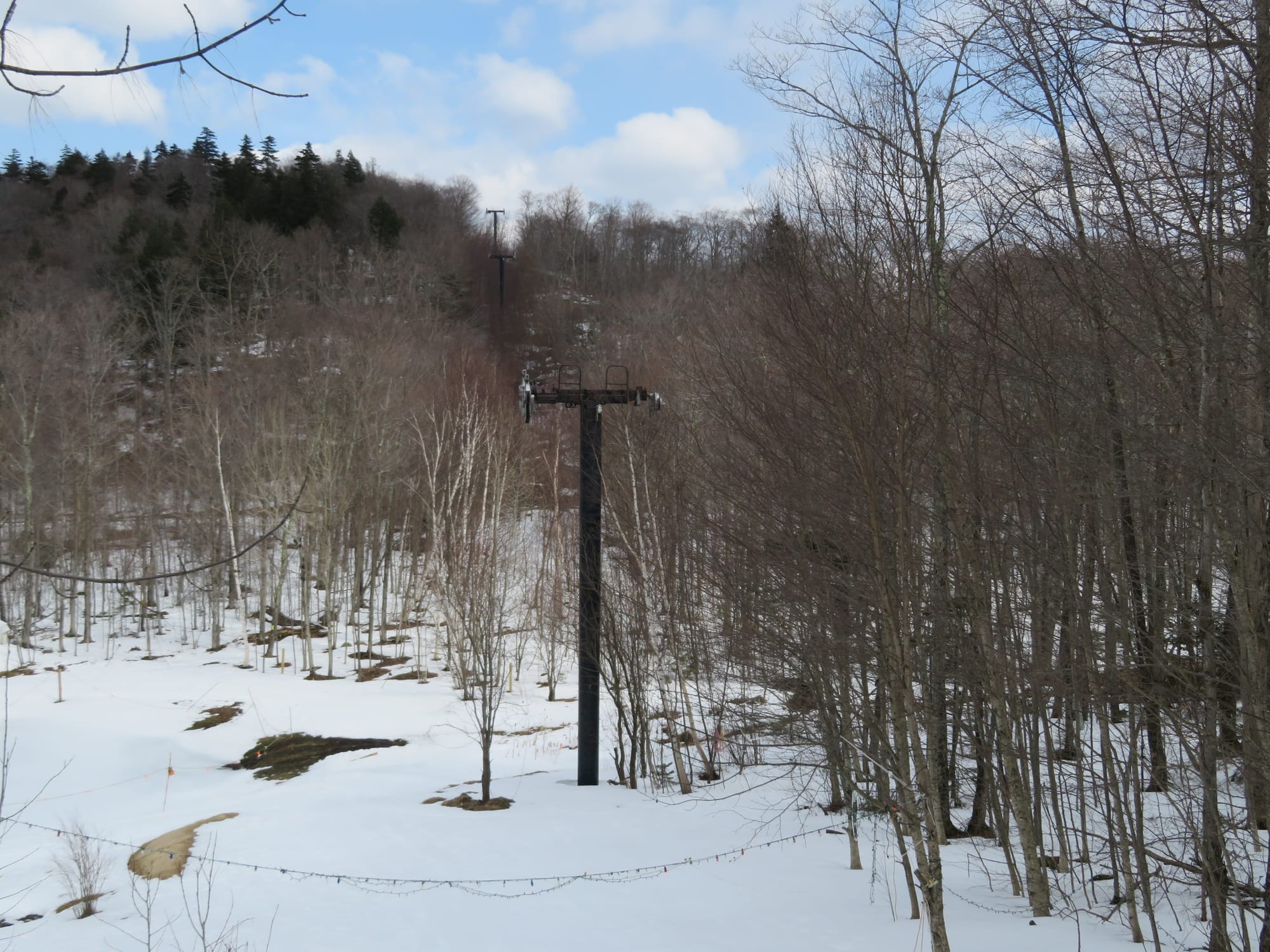
On the surface, it looks like a snowmobile park. But if you know your ski history — and I’ve been spending enough time in Vermont recently to develop an opinion — this is one of the most fascinating parcels of abandoned mountain infrastructure on the East Coast. It’s the former Northeast Passage base area of Killington Resort, and it’s back on the market.
Let me tell you why I think this deserves serious attention.
A LITTLE HISTORY FIRST
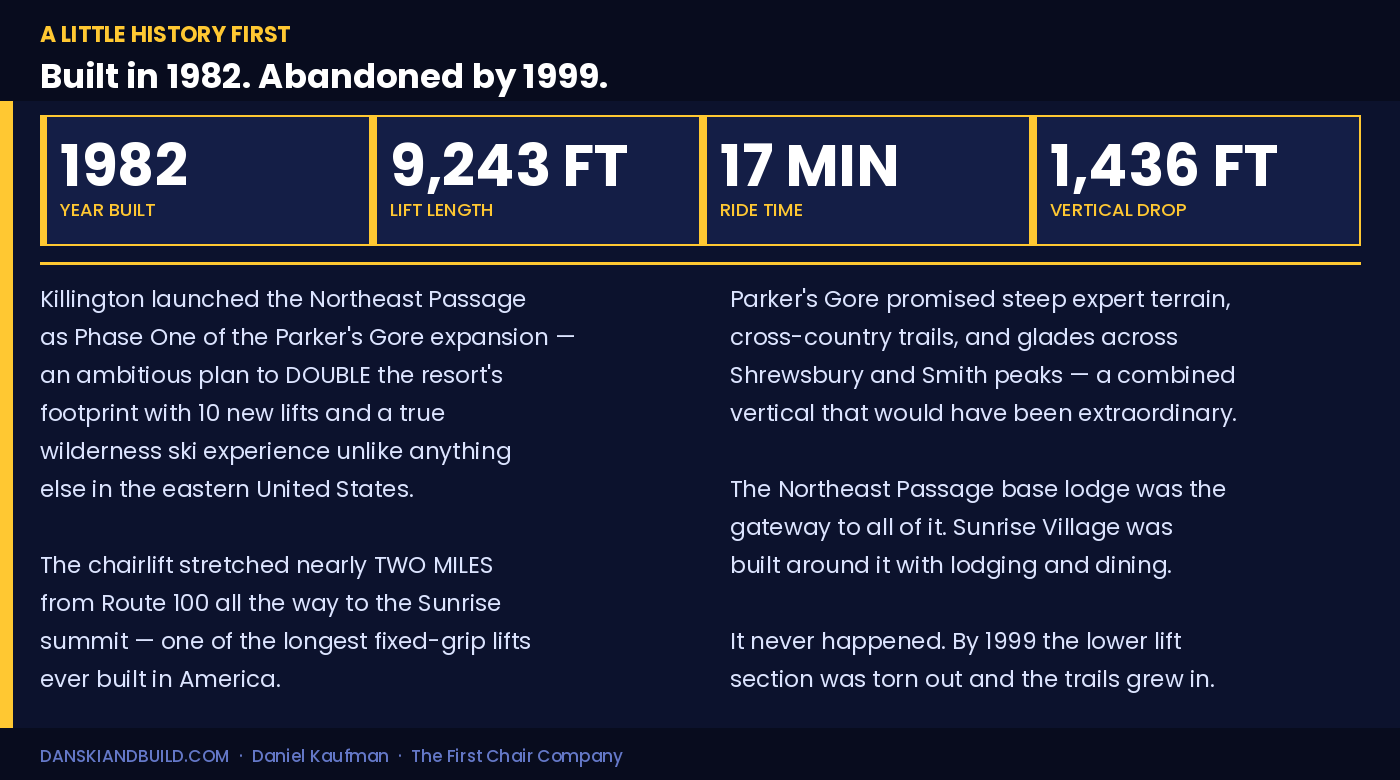
You can’t evaluate this property without understanding what it was supposed to be — and why it failed.
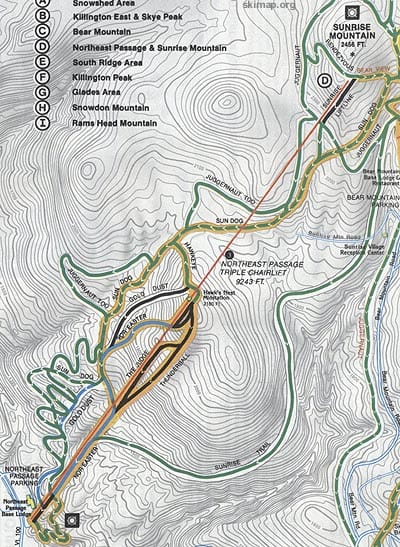
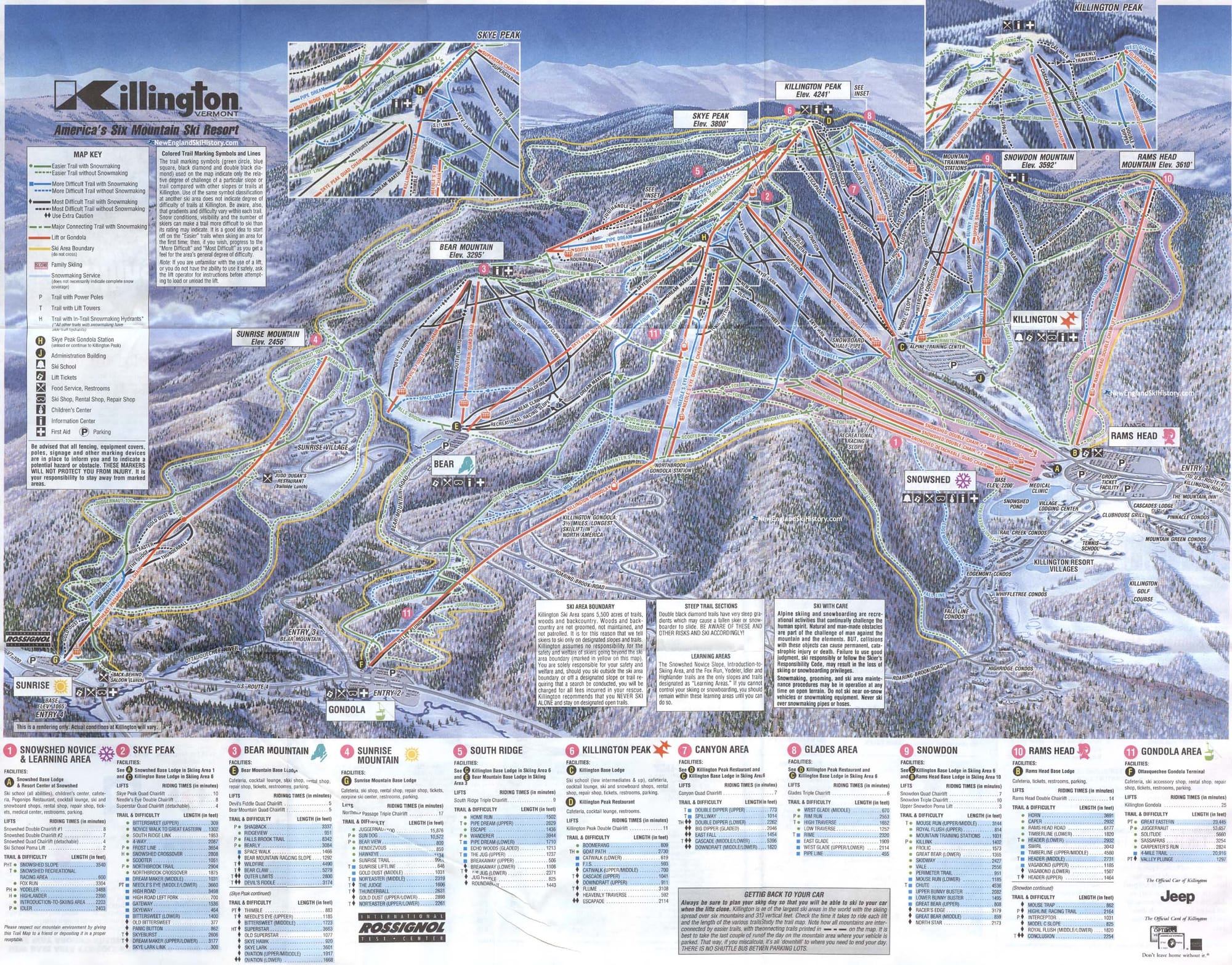
- Killington, already the largest ski area in the East, was on an expansionist tear. They had just finished Bear Mountain and set their sights further south. The idea: a brand-new base area accessible directly off Route 4, targeting skiers coming up from the south and east. They called it the Northeast Passage, and also the Sunrise area, anchored by a newly constructed Sunrise Village with lodging and dining.
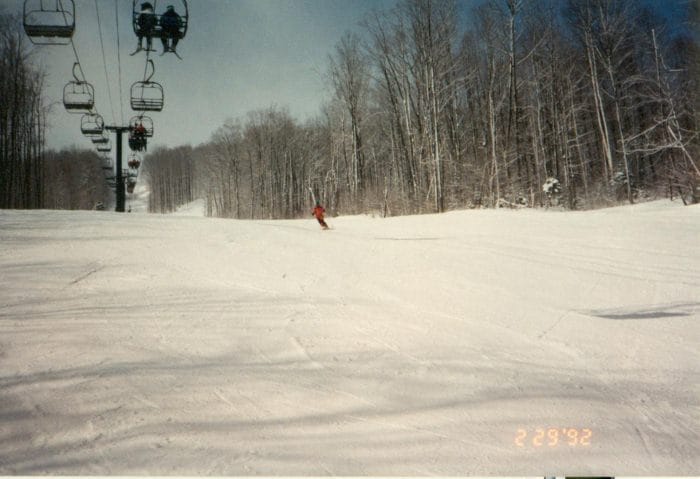
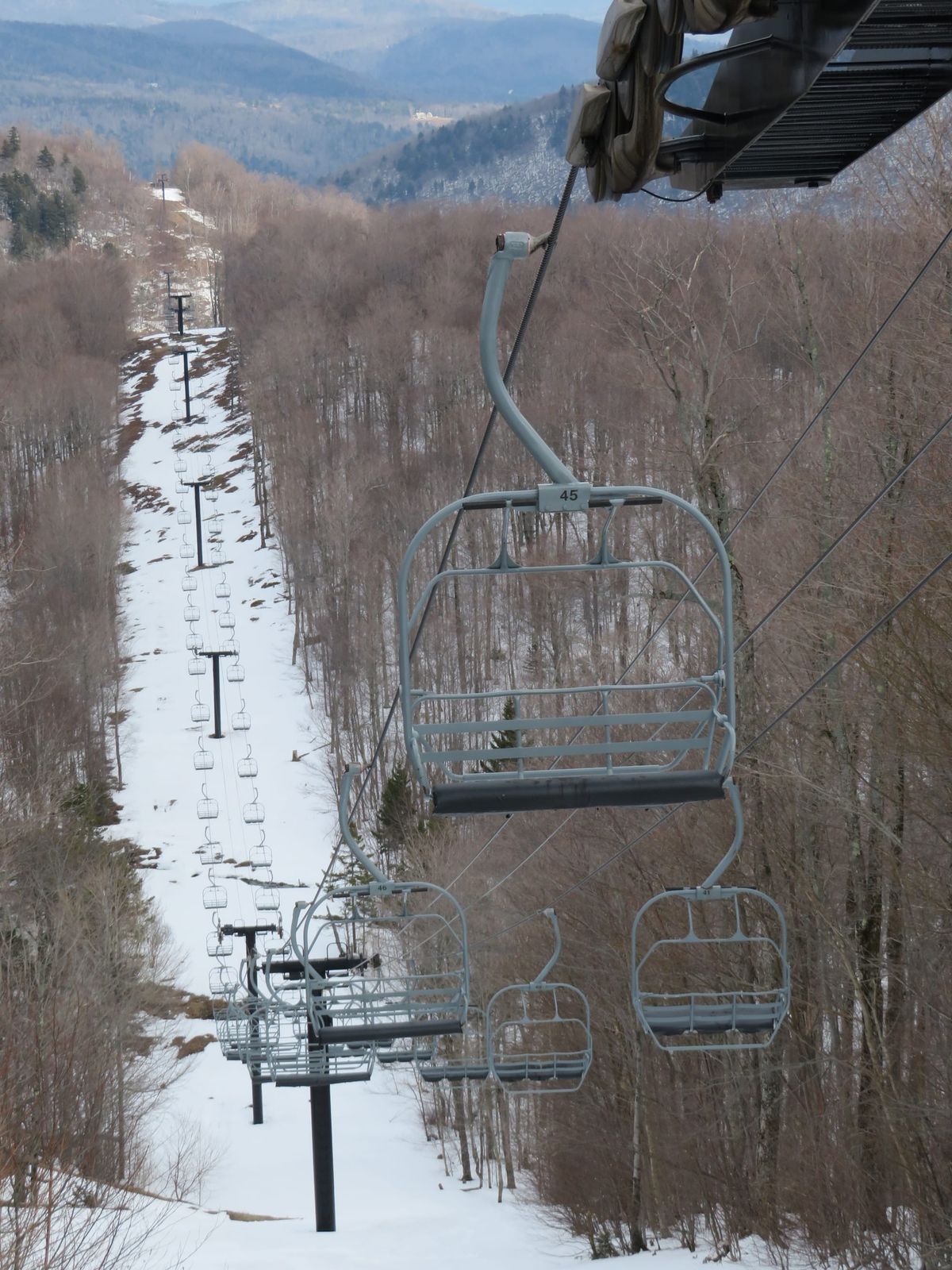
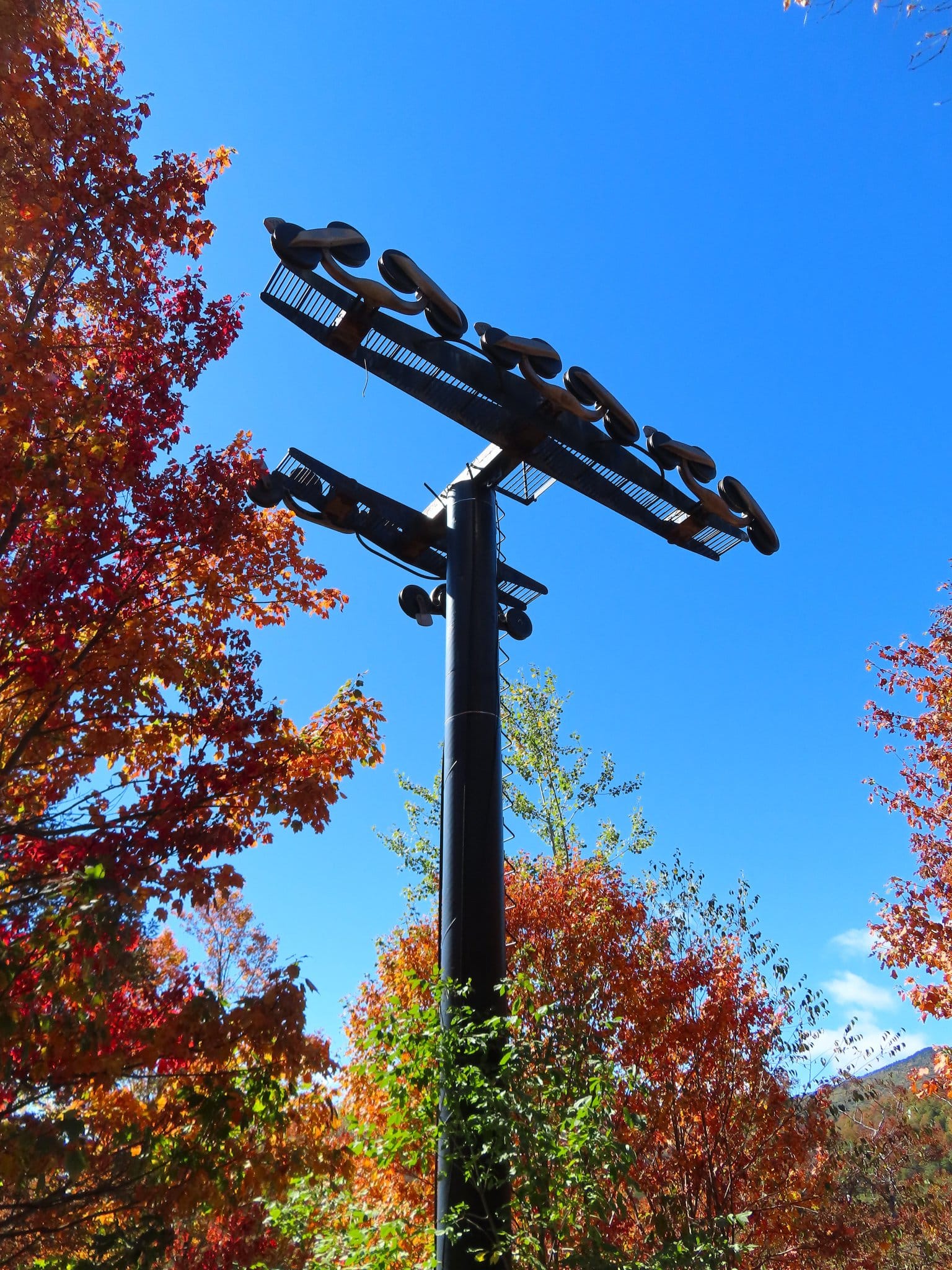
The centerpiece was a fixed-grip triple chairlift that ran a staggering 9,243 feet — nearly two miles — from Route 100 at the base all the way to the Sunrise summit, with a mid-station along the way. The lift took 17 minutes to ride, had a 1,436-foot vertical drop, and was reportedly one of the longest fixed-grip chairlifts ever built. By modern standards? Brutally slow. But by the ambitions of the early 1980s? It was a gateway.
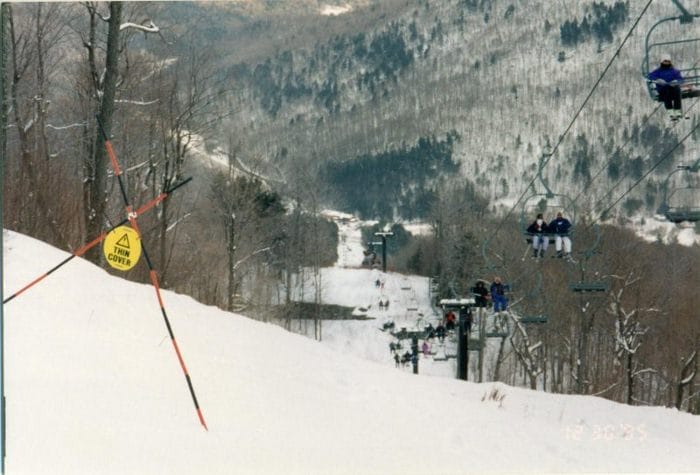
A gateway to what, exactly? Parker’s Gore.
Parker’s Gore was Killington’s dream — a vast, wild bowl sitting just south of the resort proper, with Shrewsbury Peak and Smith Peak offering what planners believed could eventually be 10 additional lifts and miles of expert terrain. The Northeast Passage lift wasn’t built to serve the existing mountain. It was built as Phase One of a massive southern expansion that would have doubled Killington’s footprint and created what enthusiasts called a wilderness ski experience unlike anything else in New England.
The full Parker’s Gore build-out called for its own cross-country trail network, expert glades, and eventually a runout all the way to Route 4 in Bridgewater. It never happened.
THE PERFECT STORM OF FAILURE
What killed Northeast Passage and Parker’s Gore wasn’t just one thing. It was an unforgettable collision of environmental politics, corporate pivots, and bad skiing math.
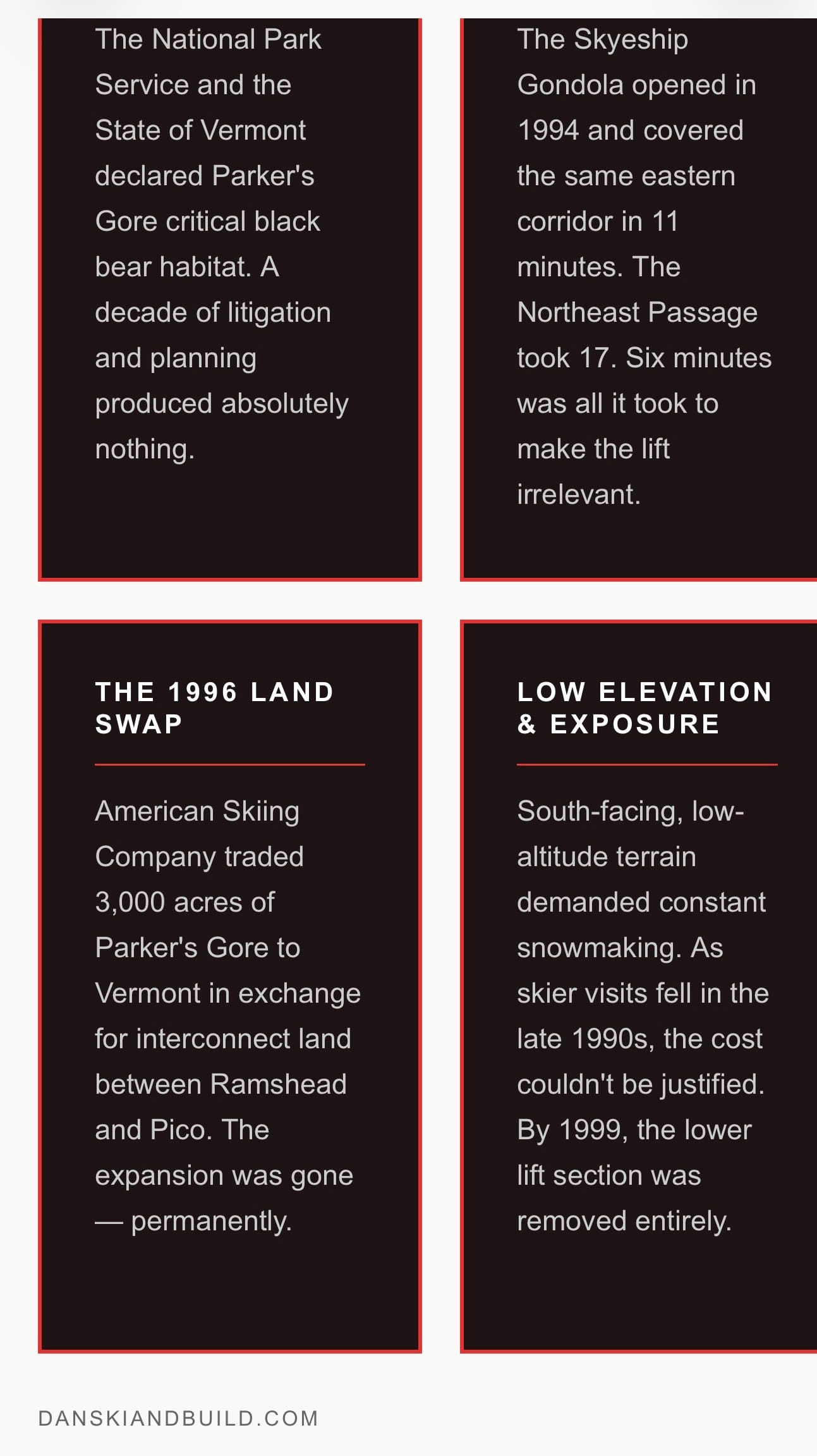
The environmental wall. Killington spent years battling to develop Parker’s Gore. The National Park Service pushed back hard on development near the Appalachian Trail corridor. A scaled-down agreement was finally reached in 1989 — only to be met with more opposition. Then the State of Vermont declared the area a sensitive black bear habitat, and that was effectively the end. A decade of litigation and planning had produced nothing.
The lift itself was a liability. Without Parker’s Gore to justify it, the Northeast Passage chairlift was serving slow, low-elevation, south-facing terrain that was a snowmaking nightmare. The crowds never materialized.
The Skyeship made it obsolete. When Killington installed the Skyeship Gondola in 1994 — covering the same eastern access corridor in 11 minutes instead of 17 — the Northeast Passage lift became a relic. Six minutes killed the value proposition entirely.
The land swap sealed the fate. In 1996, American Skiing Company traded the 3,000-acre Parker’s Gore parcel to the State of Vermont in exchange for 1,000 acres between Ramshead and Pico to enable the Killington-Pico interconnect. Parker’s Gore was gone. And with it, the entire strategic rationale for the Northeast Passage.
By 1999, the lower section of the lift was removed. The trails grew in. The base lodge became a check-in point for snowmobile and ATV tours. The mountain had moved on.
WHAT’S FOR SALE RIGHT NOW
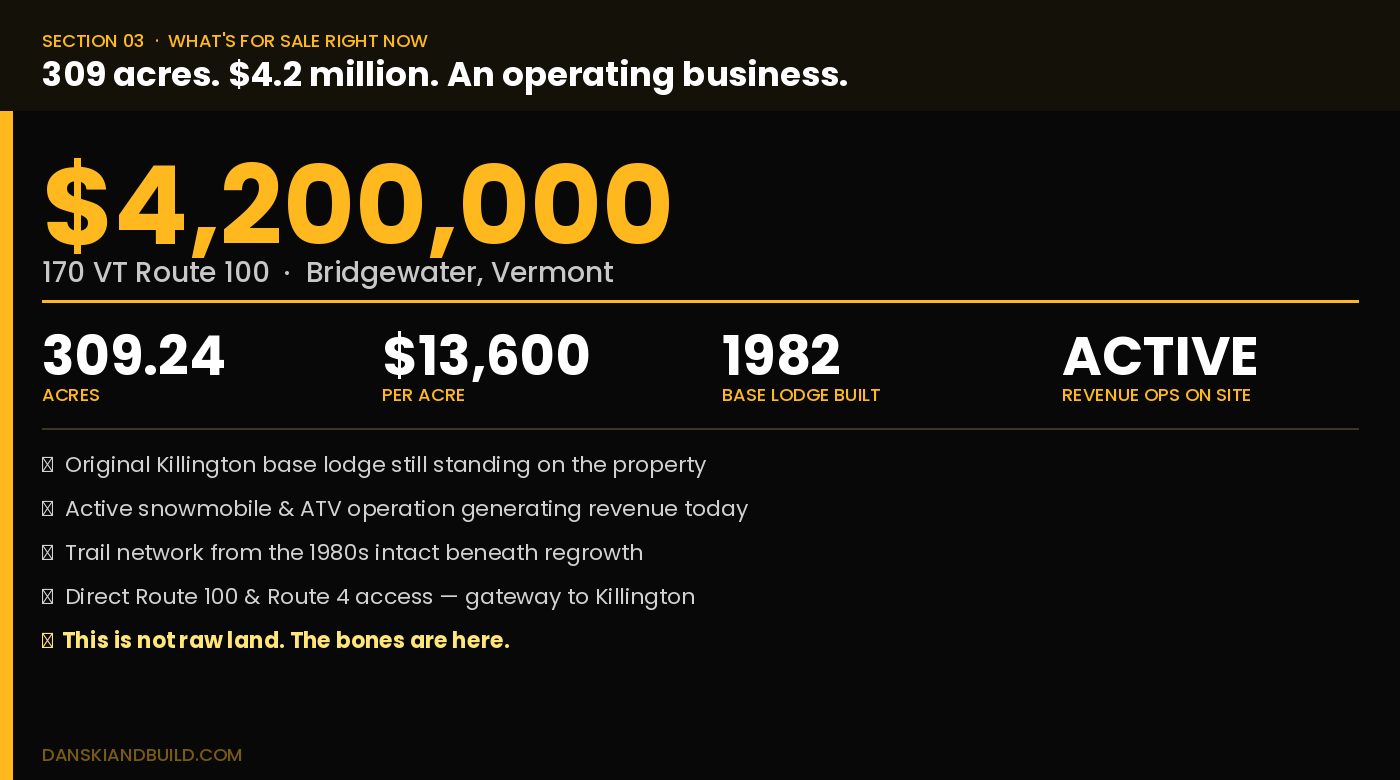
The current listing — 309.24 acres at $4.2 million — is the old Sunrise/Northeast Passage base area. The original Killington base lodge is still on the property, now used as the check-in hub for snowmobile and ATV operations. The trail network carved out in the early 1980s still exists beneath the regrowth.
This isn’t raw land. It’s improved land with infrastructure, trail cuts, and a legitimate operating business already on it. The snowmobile and ATV operation proves the property is generating revenue and has an audience. That’s not nothing.
They weren’t wrong about the location. They were wrong about the era, the lift technology, and the expansion plan.
SO WHAT COULD THIS ACTUALLY BE?
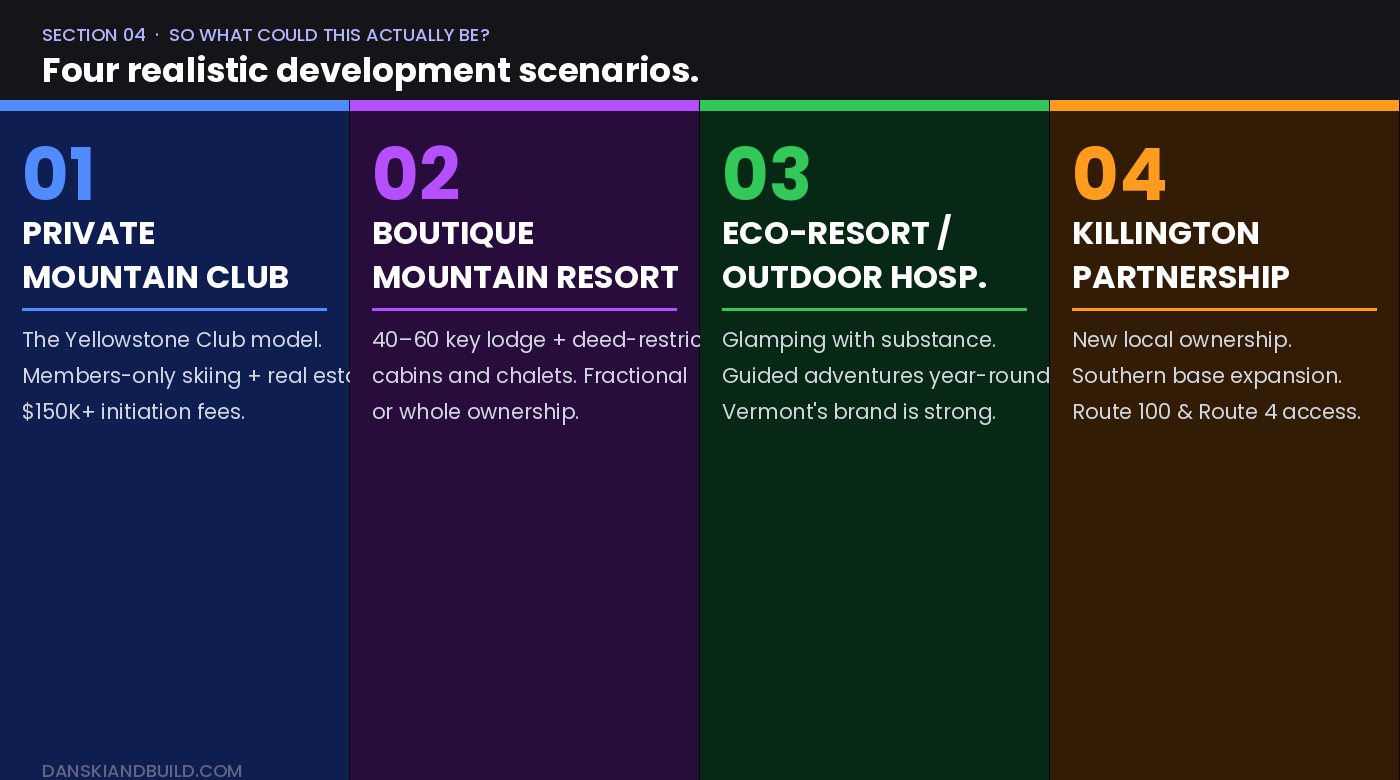
This is where it gets interesting for me. I’ve been spending time in the mountain resort real estate space through The First Chair Company, and properties like this don’t come up often.
- Private Mountain Club — The Yellowstone Club Model
The Yellowstone Club in Montana has proven that the private mountain concept — members-only skiing, curated access, ultra-high-end real estate — is a billion-dollar business. Could 309 acres adjacent to Killington support a private ski and outdoor club with its own trail network, connected to the main resort via easement or partnership?
Members who pay $150K+ initiation fees don’t care if the powder doesn’t last as long here as on Bear Mountain. They care about access, exclusivity, and experience. The existing trail cuts could be revived. The base lodge footprint is already there. And Killington access could be structured as an amenity without replicating their infrastructure.
- Boutique Mountain Resort + Real Estate Development
309 acres with a base lodge, active trail network, and a story to tell is a legitimate foundation for a boutique mountain hotel — think 40 to 60 keys in the Brush Creek Ranch or Primland mold. Destination wellness, four-season outdoor programming, snowmobile tours in winter, mountain biking and hiking in summer.
The real estate angle: deed-restricted cabins and chalets clustered around the lodge, sold as fractional or whole ownership, priced at premiums that reflect Killington adjacency. You’re not building ski-in/ski-out from scratch. You’re building a Killington-adjacent mountain compound with its own identity.
- Eco-Resort / Outdoor Hospitality Play
The land has been operating as a recreational trail destination for years. That’s not a failure mode — it’s a proven use case. Vermont’s brand in the experiential travel market is strong. 309 acres of trail network with a lodge, positioned correctly, is competitive with some of the most sought-after outdoor hospitality assets in the Northeast.
- Partnership With Killington Itself
Killington recently returned to independent local ownership after years under Powdr Corporation. The new group is Vermont-based, community-oriented, and actively pursuing the Killington-Pico interconnect. They’re also developing a new base village with Great Gulf and a new slopeside community at Bear Mountain.
Could they be interested in reacquiring the Northeast Passage parcel as part of a longer-term southern expansion? The land swap happened 30 years ago. The old Sunrise base area — with Route 100 access and existing infrastructure — might look very different to locally-minded ownership in 2026 than it did to a corporate conglomerate in 1999.
MY HONEST READ
At $4.2 million for 309 acres with existing infrastructure and an operating business, this is priced to move. That’s roughly $13,600 per acre. The question isn’t whether the asset is undervalued on a raw land basis. It almost certainly is.
The question is what it costs to unlock the upside. Lift investment. Act 250 permitting. Snowmaking economics at low elevation. None of these are deal-killers. They’re work. And they’re the kind of work that creates value if you approach it correctly.
I don’t know yet whether this is an opportunity I’m actively pursuing. But I’d be lying if I said I wasn’t running the numbers.
YOUR TURN — I WANT TO HEAR FROM YOU

A few questions for you:
Is the private mountain club model viable at this scale and price point? Would you see value in a boutique mountain hotel here, even without its own ski operation? Is Killington itself the natural buyer? And the big one: Is this an opportunity worth pursuing?
Feel free to email me directly at: danielk@outlook.com
Send me your thoughts. I read every one of them, and on a question like this, I’m genuinely seeking outside perspective.
The mountain didn’t get away forever. It’s just been waiting for someone with the right vision.
Follow along at danskiandbuild.com