The K Shaped Mountain


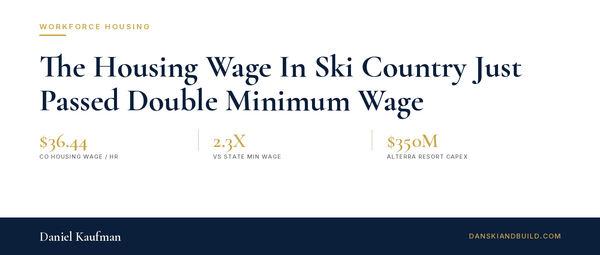
Alterra Mountain Company announced more than $350 million in capital investment for the 2026 and 2027 winter season on September 9. A new 10 million gallon snowmaking reservoir and a new lift at Deer Valley. Remote avalanche control systems at Palisades Tahoe and Mammoth. A terrain expansion at Tremblant. A premium lounge at Stratton with a fireplace and a full restaurant. Buried near the bottom of the same release was the workforce housing commitment across five resorts, Palisades Tahoe, Mammoth, Snowshoe, Steamboat, and Crystal Mountain, renovations benefiting roughly 200 employees and 160 new beds at Crystal Mountain.
I have spent 25 years financing and building housing in mountain and resort markets, and I read that release the way I read every one of them now, as two companies wearing the same logo. One builds terrain, lifts, and guest experience at a pace measured in hundreds of millions of dollars a year. The other, the one responsible for housing the people who actually run the lifts, gets measured in beds, not units, not buildings, beds.
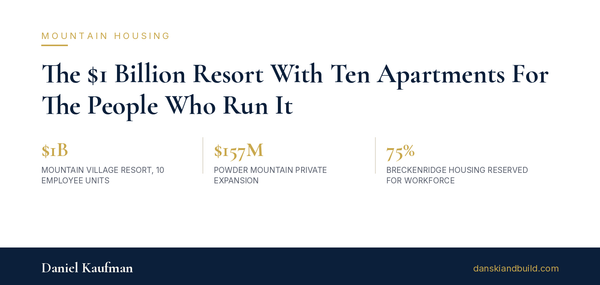
Drive a few hours from any Alterra or Vail property and you can watch the other half of this story play out at the high end. In Mountain Village, Colorado, a $1 billion Four Seasons project is under construction on four acres, with 52 hotel rooms and 43 residences priced from $4 million to $35 million, some listed above $5,000 a square foot. The project needs hundreds of construction workers to finish. It built ten employee apartments. Most of the workforce is being housed 90 minutes away in Naturita, Nucla, and Norwood, towns now straining their water systems and emergency services to absorb people the resort economy depends on but never planned to house.
I have written before about the K shaped economy in housing generally, luxury and entry level pulling apart while the middle gets squeezed out of new construction. What I did not fully appreciate until I started underwriting deals in ski country is how literally that pattern shows up on a single mountain. The luxury side gets billion dollar developments and five figure per square foot pricing. The workforce side gets ten apartments and 160 beds, numbers so small they read like a rounding error against the headcount a resort needs to open lifts on time.
It does not have to work this way. Breckenridge has spent two decades building the opposite model. Roughly 75 percent of the town's full time housing stock, about 1,700 of 2,300 occupied homes, is deed restricted for local workers. They got there with annexation agreements requiring 80 percent deed restricted units in new development, a buy down program that pulls market rate units out of circulation and resells them at a discount, and more than $13 million a year in dedicated transfer tax and rental revenue funding new construction. They still need roughly 1,200 more units, and a recent lottery drew more than 1,000 applicants for 52 apartments. Still, the town treats workforce housing as infrastructure, the same budget category as a water treatment plant, not a goodwill line item at the bottom of a press release.
That distinction is what I am building around at Oldivai. Workforce housing anchored to the employer, financed the way a hospital system or a university finances housing near its own campus, because a major resort or regional employer is the most stable anchor tenant a mountain town will ever have. You do not need every resort to hit Breckenridge's number. You need lenders and operators to underwrite workforce housing as core infrastructure risk, priced on its own merits, instead of leaving it as the last line in a capital plan dominated by snowmaking and lifts.
If you are working on employer anchored housing in a mountain resort community, or underwriting a deal where the workforce housing gap is the real risk hiding in the pro forma, I would like to hear about it.
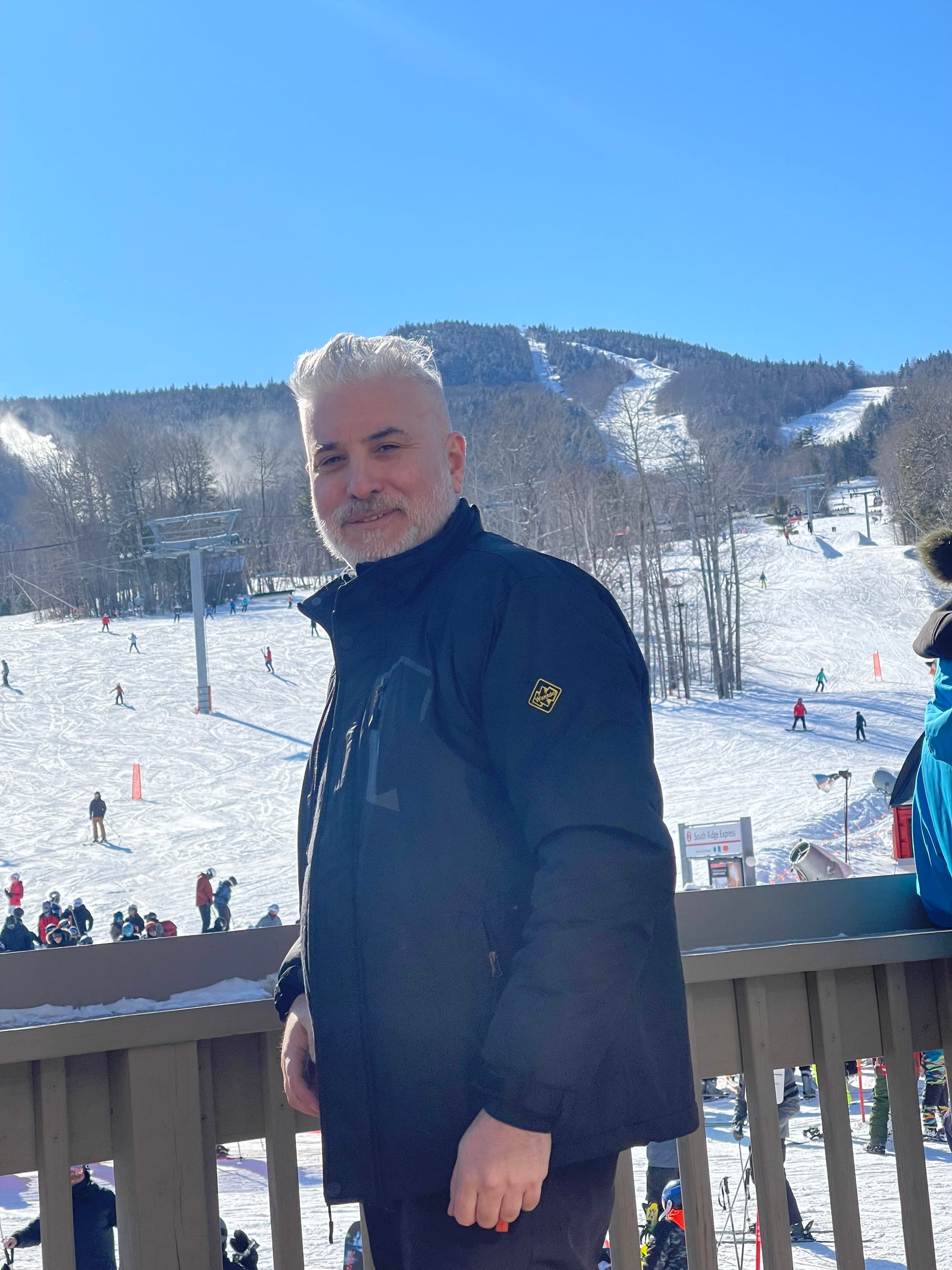
About the Author
Reach me at Daniel@kaufmanredev.com